

How To Draw With Watercolor Pencils
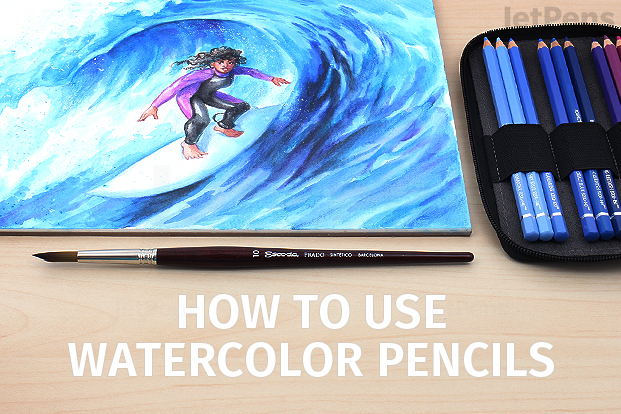
Watercolor pencils are nearly magical. Although they expect but similar ordinary colored pencils, a touch of h2o instantly transforms their marks into beautifully spreading color that looks for all the world like watercolor paint. In this guide, nosotros'll explain what watercolor pencils are, specific techniques for how to employ watercolor pencils, and recommend some of the best watercolor pencils for your art.
What Are Watercolor Pencils?
Watercolor pencils are similar to colored pencils but use water-soluble binders to concur their components together rather than not-water soluble wax or oil. This allows the colors to spread like watercolor paint when painted over with water, but it also makes them more difficult to blend without the use of water.
Although they are often spoken of every bit watercolors in pencil form, watercolor pencils are different from watercolor paints in central ways:
- It's best to use fewer layers of lighter color applications with watercolor pencils, as heavy layering can atomic number 82 to a sludgy or muddy buildup. Not every pencil line behaves the same way, so we encourage you to experiment to come across how much layering your pencils support.
- It is often incommunicable to completely remove all pencil marks from your art, even if y'all employ a lot of water. These pencil marks help add texture and distinguish watercolor pencil art from watercolor paintings.
- Watercolor pencils typically dry out more quickly than watercolor paints, and then it's essential to work chop-chop once yous add water.
Why Use Watercolor Pencils?
Watercolor pencils have several characteristics that make them an excellent choice for using on their own or with other media:
- Since they can be sharpened, watercolor pencils allow you to add fine details that are hard to achieve with a brush and may exist besides prominent if added with ink.
- The pencil strokes allow you to show texture while however providing a watercolor paint outcome.
- You tin can reach a unique hybrid look past activating some portions of a drawing and leaving others dry out.
- Watercolor pencils tin can comprehend a larger area of the newspaper more easily than typical colored pencils.
- Every bit long as information technology'due south still moisture, information technology is easier to lighten colour practical with watercolor pencils than colored pencils.
- Watercolor pencils tin can withal be used dry if you don't take admission to a brush and water.
- Watercolor pencils are easily portable and generate little mess beyond some pencil shavings.
Watercolor Pencil Supplies
Watercolor pencils tin can be used by themselves, only a few more supplies will aid you get the most out of them. Here are the supplies you should have on hand—in addition to the pencils—before we go started:
Watercolor Paper
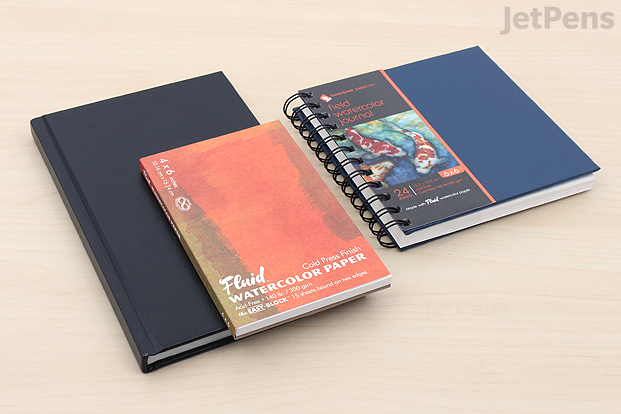
It'due south best to employ watercolor paper with watercolor pencils.
Water, Paper Towels, & Masking or Washi Tape

Don't forget to accept water, newspaper towels, and masking tape handy.
You lot don't need water just for activating dry watercolor pencil marks—y'all'll use it to clean your brush also as for techniques similar drawing on wet newspaper and wetting your pencil tip. Newspaper towels are helpful for removing excess water and colour from your paper and brush. We also recommend using masking or washi record to tape your paper down before you start working, which nosotros will explain further beneath.
Brush or Water Brush
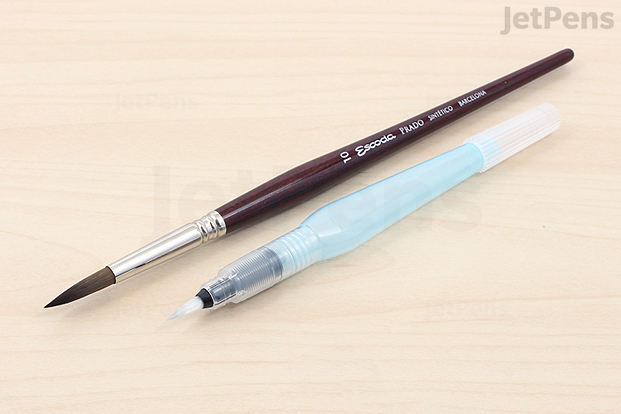
Employ a paint castor or water castor to activate pencil marks.
You can apply either pigment brushes or water brushes to activate watercolor pencils. Medium-sized brushes similar round 8 and 10 are expert multi-purpose choices as they are large enough to spread color easily, notwithstanding tin can still be formed to a point for more detailed work. Large, flat brushes are ideal for spreading large areas of colour quickly for backgrounds and abstract effects.
Sharpener

Wait for a sharpener that won't break watercolor pencils' soft leads.
Optional Supplies

They aren't strictly necessary, merely some artists similar to apply graphite pencils and waterproof pens for underdrawing and tracing bold outlines. Some techniques as well require special equipment, like spray bottles, small knives, and sandpaper.
Getting Started
Nosotros'll get into more specific techniques in the next section, simply these steps are all you lot demand to get started right away.
Brand a Sample Chart

Brand a sample chart showing how each color looks when wet and dry.
Colors from watercolor pencils often expect very different subsequently they've been activated with water. We recommend making a sample chart that shows what each of your colors looks like when information technology's dry and when it'south wet and then that you won't be caught off baby-sit by unexpected hues.
Stretch Your Paper

Stretch the paper before yous begin.
Although information technology'due south designed to withstand heavy applications of water, watercolor paper however needs preparation to continue it from warping equally you work. Moisture both sides of the paper and absorb away any backlog so that the paper is thoroughly clammy simply not dripping. Moisture four pieces of masking or washi tape and secure the paper to your work surface, covering all the edges of the paper. Allow the paper and tape to dry completely earlier you continue.
Plan Your Drawing

Start with a preliminary sketch to plan your cartoon.
Before yous kickoff drawing in earnest, it's a good idea to make a rough sketch of what you want your picture to look like. This helps you meet which areas will need more colour and which should be kept light. You can employ almost anything for your initial sketch—watercolor pencils, graphite pencils, or even waterproof pens.
Make full In Colors

Make full in the basic colors of your piece.
Once you accept an thought of how your picture should look, it'southward time to color it in. Draw with the watercolor pencils similar yous would regular colored pencils, but don't worry virtually filling in every infinite. If there are areas y'all want to exist as calorie-free every bit possible, go out them blank. The colour will spread when activated with h2o, which allows you lot to blend nearby hues into lite areas.
Be mindful of the direction and shape of your pencil strokes as you describe. Some of the marks volition prove in the finished piece, and they tin either raise or detract from its appearance. Call up virtually the textures and contours of the elements in your moving-picture show, and follow those lines with your pencil.
Activate the Pencil Colors
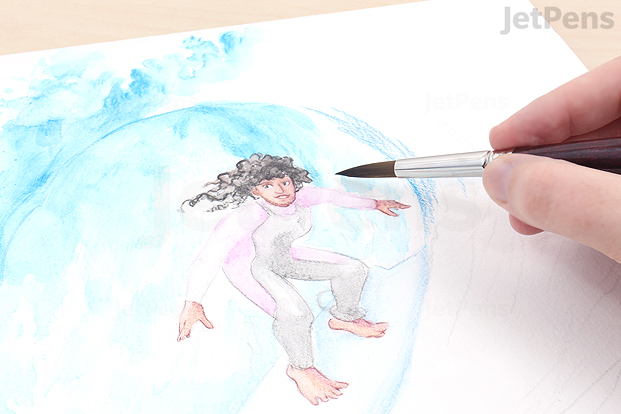
Activate the colors, post-obit the shape of the pencil strokes.
Next, activate the colors with a brush and clean water. Follow the shape and direction of your pencil strokes to give your piece a more cohesive look. You can minimize the advent of pencil strokes past working the color more with your brush, merely exist conscientious not to overwork it or the paper may pill or fray.
Layer to Add Depth and Detail
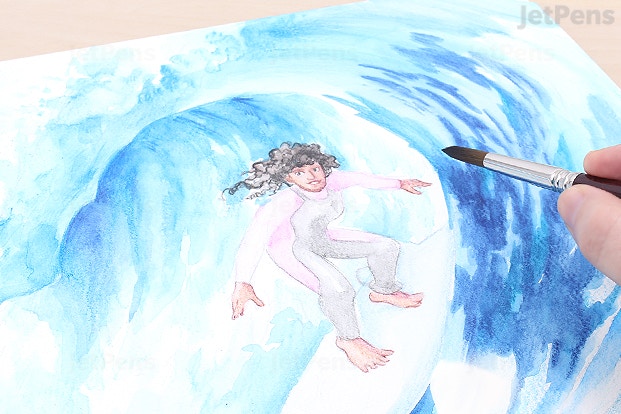
Layer on more than color to build shading, intensify colors, and add detail.
Subsequently your first application of h2o is dry out, layer more color over your piece of work to farther develop your slice. Add more of the same hue to deepen existing colors, utilize contrasting colors to add shading, and ascertain details with more precise marks. Blend the new colors with water just as before. Repeat this process as necessary until your piece is finished, but don't utilise likewise many layers as heavy layering may dirty the colors.
Work Light to Nighttime

Motion from light colors to dark when wetting pencil colors.
Always get-go with lighter colors and and so move on to darker areas when yous activate pencil colors. This prevents the darker colors from overwhelming the light areas. Y'all can read more about this in our Introduction to Watercolor Techniques.
Watercolor Pencil Techniques for Beginners
Watercolor pencils tin make very different effects depending on how y'all use them. These are some of our favorite watercolor pencil techniques—try them out, experiment, and see what works for y'all!
Means to Command Color Intensity
1. Vary Pencil Pressure level

Draw with hard or light pressure level to make intense or fragile hues.
One of the well-nigh intuitive means to control the intensity of your colors is to printing harder if you want the pencil to eolith more color and apply lighter pressure if you desire a more delicate hue. Be aware that lines made with heavy pressure level won't dissolve as thoroughly equally those made with light pressure, so they'll exist more than visible in your finished piece.
2. Depict Dense and Loose Lines

Draw more than loosely or densely to control color saturation.
Another way to vary the saturation of your colors is to use even cartoon pressure but add more or fewer marks on the folio. Several lines drawn shut together volition brand more bright colors when activated than fewer lines drawn further apart.
3. Moisture Pencil Tips
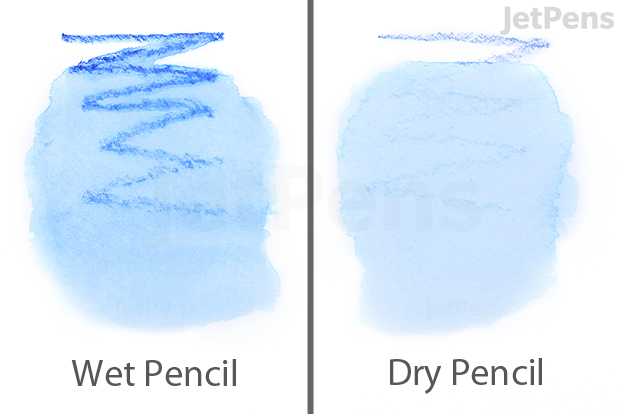
Dip pencil tips into water for intense details.
For intense details, dip the tip of your pencil into water before drawing. The resulting marks will be brighter and more bold than color from a dry out pencil. Colour practical this manner is difficult to blend, and then it's best for finishing touches.
4. Use Lifting to Lighten Color

Blot moisture color with a dry brush or paper towel to lighten it.
If you activate a color only to realize that it'due south too nighttime, don't despair—but practice human action quickly. Blot the area with a dry brush or paper towel while it is still wet. This absorbs, or "lifts," backlog colour. Lifting can also exist used to make light-colored features, like clouds in vivid blueish skies.
To lift dry color, paint on some plain h2o and allow it to sit for a while to reactivate the color earlier blotting. This won't remove as much color as lifting while wet, just it should lighten information technology somewhat.
Means to Mix Colors and Add Shading
1. Layering by Wetting Between Each Color Awarding

Allowing each layer to dry before adding some other lets underlying colors testify through.
There are 2 ways to layer with watercolor pencils. The first manner is to apply one colour, activate information technology, and allow it to dry before applying and activating another colour over information technology. This is similar to layering with watercolor paint in that the colors don't actually mix. Instead, the underlying color shows through the color on top to produce a new hue. This method of layering is more prone to leaving difficult edges betwixt colors and tin be time consuming since you have to wait for each layer to dry.
2. Layering Multiple Colors Before Wetting

Multiple dry colors layered together will mix when activated.
The second way to layer with watercolor pencils is to use multiple dry colors over each other before activating them with h2o. This method is faster than the previous technique and blends the colors more thoroughly so that the individual hues don't show through. The upshot can exist less nuanced than wetting betwixt each layer, merely it'south a great way to mix a new color.
3. Blending

Alloy adjacent colors together for shine transitions.
Blending allows y'all to brand smooth transitions between nearby colors. Afterwards you accept practical the colour, use a wet brush to spread the lighter hue into the darker color until they class a smooth gradient. Make certain that you don't blend from dark to light, or the darker color will obscure the light one.
Means to Apply Color
1. Draw on Wet Newspaper

Drawing on wet newspaper produces intense color and blooming effects.
The most mutual way to apply watercolor pencil is to draw with a dry pencil on dry paper, simply you lot can also describe with a dry pencil directly onto wet paper. This technique is similar to drawing with a moisture pencil tip in that information technology delivers intense colors, merely it also produces softer, fuzzier lines that are harder to control. Since the color is activated as soon as it touches the wet newspaper, information technology won't spread very well subsequently it has been allowed to dry.
2. Scrape Color Onto Wet Paper
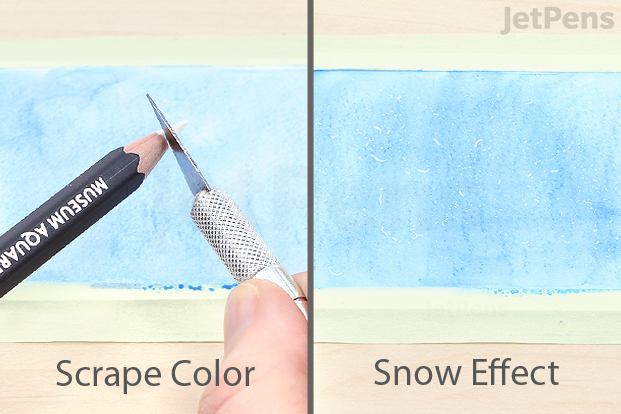
Use a knife or sandpaper to scrape pencil color onto wet newspaper.
This technique is a fun manner to class speckled and dappled effects. Kickoff with a moisture surface. Then scrape colour from a pencil with a knife or sandpaper, assuasive information technology to fall onto the moisture newspaper. This works especially well to depict natural phenomena similar falling snow and ocean spray. You can also make streaky textures by brushing over the pencil flakes before the background dries.
If you lot are applying a color that is lighter than the groundwork, await til the underlying color is dry and then re-moisture information technology before scraping the pencil. This prevents the light color from blending into the darker groundwork and disappearing. If you are using a darker color on a low-cal background, you can work direct with the wet background color.
3. Choice Up Color From the Pencil Tip

Use your brush to paint with color direct from the pencil tip.
To avoid the appearance of pencil strokes in your fine art, simply utilise a wet castor to pick upwardly color directly from the tips of your pencils and pigment as you commonly would. This is a great way to make watercolor pencil art wait like traditional watercolors. It's besides a helpful technique for those who are more used to painting than drawing.
4. Use a Paper Palette

Paper palettes are like shooting fish in a barrel to travel with.
Another way to make your pencil drawings look like watercolors is to piece of work from a paper palette. Heavily apply the colors you want to use to a piece of newspaper. Then, option up color with a moisture castor and pigment with it. This tin can be very convenient for brusque trips since the paper takes up less space than pencils. Although paper palettes allow yous to mimic the look and feel of using watercolor paints, it's not a direct i-to-one substitution—watercolor pencils still dry more quickly than paints and work better with fewer layers.
Means to Apply Water
1. Control the Visibility of Pencil Lines

Minimize pencil lines past working them with a wet brush.
To minimize pencil lines then that the art looks more like watercolors, utilise more h2o and piece of work the color with your brush to pull information technology upwardly from the paper. Don't get overboard, though—overworking tin can damage both the newspaper and the brush. To keep pencil lines more visible, utilize less h2o and don't work the colour any more than than necessary. This lets yous harness the pencil lines to indicate texture and movement.
2. Use a Spray Bottle

Spray drawings with h2o to blend them without a brush.
To moisture big areas of color speedily and give them a spontaneous feel, apply water with a spray bottle instead of a brush. Make certain to tape the paper down beginning to prevent it from buckling and causing the colors to run together. Add together h2o gradually and bank check between sprays until yous've achieved the await you want. You can and then leave the drawing as-is for a soft-focus issue or add further definition subsequently the paper dries.
Ways to Use Watercolor Pencils With Watercolor Pigment
1. Add together Item To Watercolor Paintings
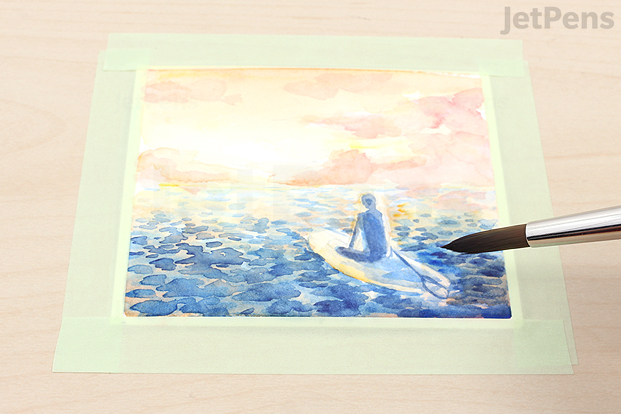
Watercolor pencils perfectly complement watercolor paint.
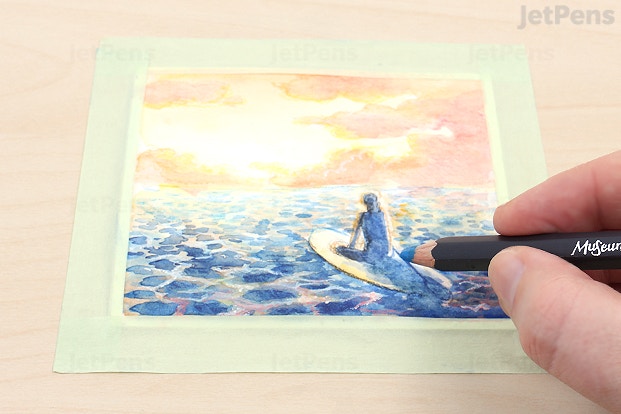
Use watercolor pencils to add detail to watercolor paintings.
In addition to making beautiful art in their ain correct, watercolor pencils are a perfect complement to watercolor paints. Their power to be sharpened to a fine bespeak makes them ideal for adding fine details to paintings that are hard to achieve with a brush. In addition, outlines made with watercolor pencils aid define shapes without the prominence of ink. Considering the pencil marks are water-soluble, they can be composite into the surrounding areas to look like an integral part of the piece.
2. Use Light-Colored Watercolor Pencils For Underdrawing
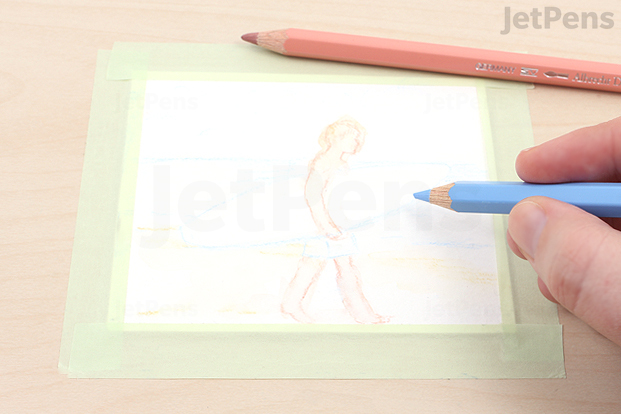
Sketch with light-colored watercolor pencils instead of graphite.
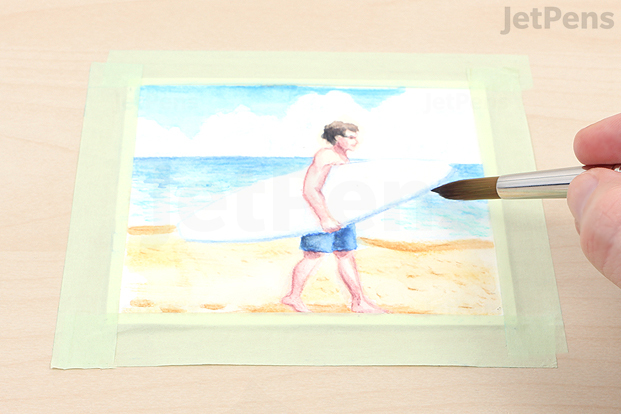
The pencils will activate when you lot pigment, blending with the final slice.
Artists often make preparatory drawings chosen underdrawings earlier painting. Sketches made with graphite pencils may prove through light areas if they're non erased, merely you tin can get effectually this by using light-colored watercolor pencils instead. The colors you apply for the underdrawing will activate when yous commencement to paint, becoming function of the finished art and giving it a unified look.
three. Use Dark-Colored Watercolor Pencils for Value Studies

Sketch with dark-colored pencils and spread the colour to bear witness dark and middle values.
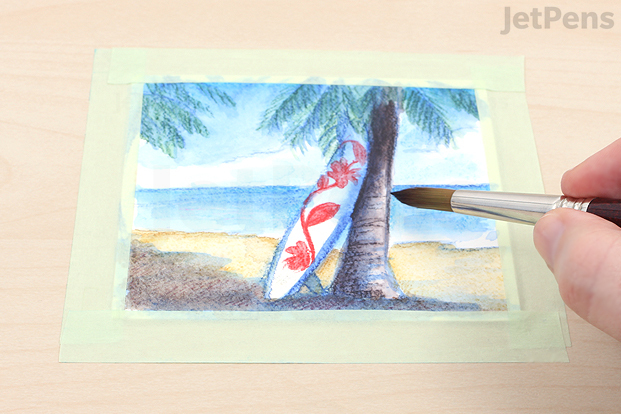
The value written report gives the painting a cohesive background.
Artists also often use value studies to return a scene in lights and darks, which reveals its underlying structure independent of color. To apace make value studies with watercolor pencils, use dark colors to draw the initial sketch. Then wet and spread the colour to indicate where the dark and medium-dark areas should be, leaving the lightest spots blank. When the value study is dry, paint directly over it to requite your piece a cohesive await with built-in shadows.
The Best Watercolor Pencils
The all-time watercolor pencils produce vivid color and come in a broad range of hues. Greater vibrancy allows you to produce many unlike tones by irresolute the pressure you employ, while an all-encompassing color range lets you lot find the perfect colour even if it'south hard to alloy from pencil. It's also all-time to choose pencils that are bachelor individually so that you can easily replenish the colors you use the most.
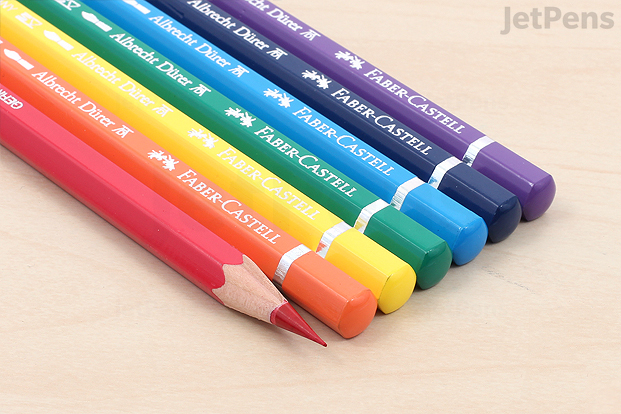
Named in honor of German creative person Albrecht Dürer, these professional-quality watercolor pencils from Faber-Castell contain merely the highest-quality pigments. This gives them brilliant color and excellent lightfastness to prevent your art from fading over time. The lightfastness of each color is indicated past a series of asterisks on the torso of the pencil. They come in an extraordinary range of 120 hues, which are color-matched with other Faber-Castell products for easy multi-media work.
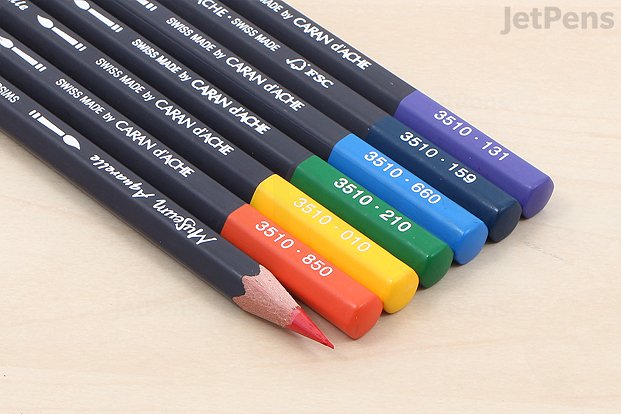
Equally their name suggests, Caran d'Ache Museum Aquarelle Pencils are designed to produce museum-quality artwork. Their thick, uncommonly vibrant and creamy cores are made with highly concentrated paint that spreads very well. Like the Faber-Castell Albrecht Dürer, the lightfastness rating of each pencil is printed on the barrel. Caran d'Ache Museum Aquarelle pencils come in 76 colors.

Derwent Inktense pencils evangelize an intense colour payoff when activated, assuasive yous achieve vivid color with less pencil. They are highly soluble and a pleasance to employ. Similarly to cartoon ink, these pencils' color becomes permanent when dry. This makes them platonic for multimedia art. These vivid pencils come in 36 colors and are also bachelor in our JetPens Water Brush Multi Media Kit.
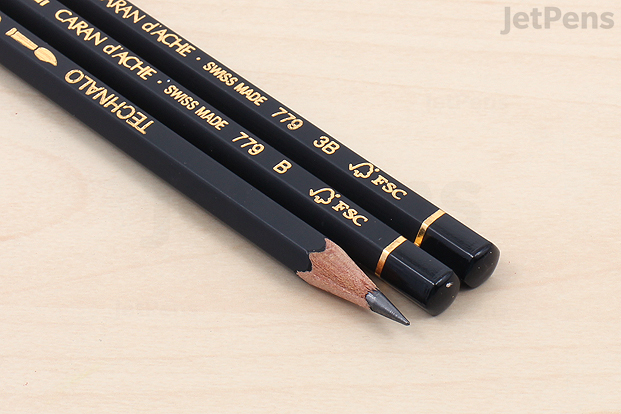
Caran d'Anguish Technalo Pencils are not technically watercolor pencils, but they are something else merely as special—water-soluble graphite pencils. This allows you to both draw and pigment with graphite to produce beautifully smooth shading and wash effects. They erase like other graphite pencils when get-go practical but resist erasing afterward they take been activated with water. Caran d'Anguish Technalo Pencils come up in 3 grades: HB, B, and 3B. Read our guide to The Best Graphite Cartoon Pencils to learn more about these and other graphite pencils.
Compare These Pencils
Practise yous desire to review all of our recommended pencils at in one case? Use our comparison tool to run across their specifications next.
Our writers draw on their personal expertise, consult our in-house subject matter experts, and exercise extensive enquiry to make our guides as accurate and comprehensive as possible. We so test every finding that makes it through the enquiry stage. Only the techniques and tools whose performance we personally confirm make information technology into our guides as recommendations.
Conclusion
Watercolor pencils combine the best features of colored pencils and watercolor paints, allowing artists to reach highly precise marks, textured lines, and gentle washes with i medium. Have yous tried using watercolor pencils? Tell u.s. near your favorite techniques in the comments below!
Related Posts

Source: https://www.jetpens.com/blog/How-to-Use-Watercolor-Pencils/pt/972
Posted by: keoraws1985.blogspot.com
0 Response to "How To Draw With Watercolor Pencils"
Post a Comment